
Valve modification services involve adapting standard valves for corrosive media, oxygen or chlorine service, automation, and other specialized requirements. Under tight project schedules, many buyers turn to a local shop promising a quick turnaround. But an unauthorized shop may not meet the same standards as the original manufacturer, which can raise operational and compliance risks.
Learn more about those risks and what separates an authorized shop from one operating on its own.
What Happens When Valve Modifications Go to an Unauthorized Shop
“Unauthorized” doesn’t mean disreputable, only that the shop has no formal approval from, or oversight by, the original manufacturer. That gap creates four categories of risk: safety, liability, documentation, and long-term performance.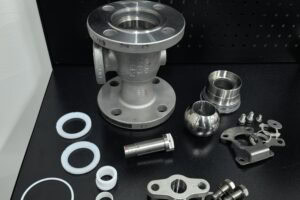
Safety Risks From Unverified Work
Modifications performed outside OEM oversight can introduce problems that don’t surface until the valve is back in service, including:
- Dimensionally incorrect replacement parts
- Incorrect torque specifications on bonnet bolts
- Improper reassembly that passes visual inspection but fails under pressure
Non-OEM and refurbished-and-relabeled components have turned up in chemical plants, power plants, and other critical facilities. In process environments, a valve that fails in chlorine or oxygen service creates both a maintenance problem and a safety event.
Liability Exposure for Owners and Operators
If a modified valve fails, the modification itself often becomes the focus of legal scrutiny, and liability can shift to the company that performed the unauthorized work and the facility that hired them.
Process safety management (PSM)-covered facilities face added regulatory risk. OSHA names piping systems, including valves, as covered equipment under its Mechanical Integrity requirements (29 CFR 1910.119(j)), and a modification can also trigger the standard’s separate Management of Change requirements (1910.119(l)). Doing that work outside a documented, OEM-backed process can leave a facility out of compliance with either provision, even without an incident.
Warranties, Documentation, and Traceability at Risk
Voided or Limited Manufacturer Warranties
Unauthorized modification is one of the most common reasons manufacturers deny a warranty claim, and working with a shop outside the OEM’s oversight can void coverage for any damage tied to that work. At KITZ Corp. of America, our Engineered Services team performs all modifications in-house using genuine KITZ components. This keeps the valve under OEM custody throughout so the full manufacturer’s warranty remains intact, along with official KITZ inspection and material test reports on every order.
Lost Traceability Under API Standards
API RP 591 valve qualification is tied to a specific manufacturing facility and does not transfer to another shop, even one owned by the same company. For reconditioning gate, globe, and check valves, API RP 621 allows either an OEM-owned/OEM-approved facility or an independent shop, but either way requires a documented Total Quality Management program. Only the OEM path also carries the manufacturer’s own qualification, genuine parts, and warranty continuity, a distinction that matters for traceability and audits.
Performance Risks: Why “Good Enough” Doesn’t Hold Up
Non-OEM components are linked to early-life failures, often within 12 to 18 months, due to differences in materials, tolerances, and validation testing.
Take oxygen and chlorine service cleaning: Shops without specialized equipment typically clean valves by hand, which risks human error, fatigue, and inconsistent results in internal passages. At KITZ, our team uses a controlled two-step process—a hot parts pre-wash followed by ultrasonic cleaning for a verifiable, repeatable result.
Learn more about the most common valve modifications and how we deliver them.
What Makes a Valve Modification Shop Authorized
API RP 621 sets the baseline: Whether a reconditioning facility is OEM-owned/approved or independently operated, it must run a documented Total Quality Management program.
What separates an authorized shop is the manufacturer relationship behind it—the OEM’s own repair procedures, a genuine parts and material-certification channel sourced through the manufacturer, direct access to the OEM’s engineering team, and ongoing audits the manufacturer conducts to keep that authorization current. An independent shop can meet the QA-program bar on its own, but it can’t replicate that standing relationship with the original manufacturer.
Before sending a valve out for modification, ask a simple question: Is the shop accountable to the manufacturer, or is it operating independently?
Inside KITZ’s Authorized Valve Modification Network
We handle OEM valve modification work through two channels:
- In-house Engineered Services team in Houston, Texas. We provide special cleaning, trim and bolting upgrades, actuation integration, and stem extensions under KITZ quality controls, using genuine KITZ parts. Every order includes complete documentation, with our warranty covering both the valve and the modification.
- Nationwide network of KITZ-authorized partner shops. Our authorized partners are Gulf Coast Modification, Kirksey Machine, Midwest Valve Services, Southern Valve Services, United Valve, and Universe Machine (Canada). Each partner operates under formal approval and documented QA standards aligned with OEM requirements.
That consistency is what separates authorized valve repair shops from independent alternatives and gives procurement teams and engineers a defensible paper trail.
Partner With KITZ for Safe, Traceable Valve Modifications
Unauthorized valve modification work introduces safety, liability, warranty, and performance risk that’s easy to underestimate until something fails. The solution is to stay within an OEM-authorized ecosystem where accountability is clear, and documentation is complete.
If your next project requires valve modification services, KITZ is ready to help. Contact us to discuss your application, or request a quote for a valve modification solution.