
What It Means to Be on an End User’s Approved Manufacturer List (AML)
Comments Off on What It Means to Be on an End User’s Approved Manufacturer List (AML)Refining, chemical, and other industrial processing facilities operate under extreme pressure, high temperatures, and strict environmental regulations. They rely on high-performance flow control equipment to prevent unplanned downtime and protect worker safety.
That’s where an approved manufacturer list, or AML, comes in. If you’ve heard the term used internally but are unsure exactly what it means, here’s a look at what it takes for a valve manufacturer to earn AML status and why it matters.
What Is an Approved Manufacturers List?
An approved manufacturer list is a vetted roster of suppliers that a company has cleared to provide a specific part or material.
The list exists to manage risk. A manufacturer that can produce one valve that meets spec is one thing. Repeating that result reliably, batch after batch, is another—and it’s that track record of consistency, not just the ability to make a compliant valve, that AML approval is meant to verify.
One detail that surprises newer buyers: AML approval is usually tied to a specific manufacturing location, not just a company name, so a supplier’s status on an end user’s approved manufacturers list isn’t automatic or permanent.
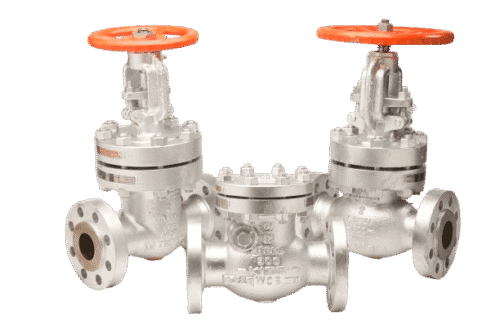
What It Takes to Get on an End User’s AML
Creating an approved manufacturer list starts with a documentation review, where the end user examines a manufacturer’s quality systems, material certifications, and testing procedures. From there, most companies conduct an audit, either in person or virtually, of the actual production facility. Many companies also rely on third-party testing standards, such as API RP 591, to independently verify a valve design rather than take a manufacturer’s word for it.
Getting listed isn’t a one-time thing. Facility changes, ownership changes, or a lapse in quality can trigger a fresh review, so staying on an end user’s AML takes ongoing performance, not just a strong first impression.
Quality Audits at KITZ
For KITZ, getting on an end-user AML often involves thorough quality audits conducted in person at our factories. Larger companies typically send representatives to inspect one of our many global manufacturing facilities firsthand, while smaller companies sometimes rely on a prior audit conducted by another qualified company instead.
We welcome this level of scrutiny. Opening our facilities to direct, in-person inspection is how KITZ backs up our AML status with more than a claim on paper, letting end users verify our production standards for themselves.
Why AML Status Matters for Distributors and Procurement Teams
When a manufacturer holds AML approval, much of the vetting work is already done. That’s the practical payoff for distributors and procurement teams: faster specification, fewer redundant audits, and confidence that AML certification valves perform the same way order after order.
This isn’t only relevant for the most demanding, severe-service applications. The same core components and quality standards run through the manufacturer’s entire product line—they don’t change between a routine shutoff valve and a specialty configuration.
KITZ’s AML Status: What Near-Universal Approval Signals
KITZ Corporation of America is on the approved manufacturer list of nearly every major industrial producer in the world, a distinction few valve manufacturers can claim. That track record traces back to our vertically integrated manufacturing: We control our own castings, machining, assembly, and in-house testing, which is built into every stage before a valve ships. Explore our full industrial product lineup.
Tier One Valve Manufacturer
In the valve industry, Tier One describes manufacturers that meet the highest, most consistent quality standards, not just the minimum needed to pass. Few manufacturers hold that distinction, and fewer still can back it up with a spot on nearly every end user’s AML.
KITZ is a Tier One AML valve manufacturer. We own our foundries, pour our own metal, design our own tooling, and control every step of production from casting through final testing. If a valve fails our internal standard before it ships, we melt it down and start over. That level of oversight is what separates a true Tier One manufacturer from all others.
Partner With an AML Valve Manufacturer
Being listed on an approved manufacturer list is a signal that a supplier’s quality has already been tested and verified, which simplifies sourcing for procurement teams and distributors alike. KITZ’s near-universal AML status is backed by:
- Tight quality control. Every stage of production, from casting to final testing, stays in-house. Our Industrial Division conducts 100% API 598 bubble-tight testing on every valve before it leaves the facility.
- A broad range of specialty alloys. Our valve lines cover brass, bronze, carbon steel, stainless steel, ductile iron, and exotic alloys.
- Global engineering support. KITZ maintains international engineering and sales offices, and our U.S. office in Houston, Texas, provides on-site valve engineering services such as specialty cleaning and modifications using OEM parts.
- Ongoing sustainability initiatives. Every KITZ valve is low-emission, and we continue to spearhead sustainability initiatives across our manufacturing facilities.
- A customer service mindset. Timely, responsive support is treated as a core part of the buying experience.
Ready to source valves from a manufacturer companies already trust? Request a quote or contact us today.
OEM Valve Modifications vs. Unauthorized Third-Party Shops: What’s the Real Risk?
Comments Off on OEM Valve Modifications vs. Unauthorized Third-Party Shops: What’s the Real Risk?Valve modification services involve adapting standard valves for corrosive media, oxygen or chlorine service, automation, and other specialized requirements. Under tight project schedules, many buyers turn to a local shop promising a quick turnaround. But an unauthorized shop may not meet the same standards as the original manufacturer, which can raise operational and compliance risks.
Learn more about those risks and what separates an authorized shop from one operating on its own.
What Happens When Valve Modifications Go to an Unauthorized Shop
“Unauthorized” doesn’t mean disreputable, only that the shop has no formal approval from, or oversight by, the original manufacturer. That gap creates four categories of risk: safety, liability, documentation, and long-term performance.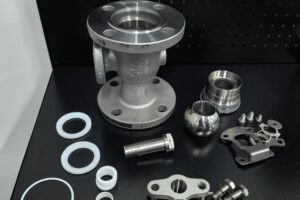
Safety Risks From Unverified Work
Modifications performed outside OEM oversight can introduce problems that don’t surface until the valve is back in service, including:
- Dimensionally incorrect replacement parts
- Incorrect torque specifications on bonnet bolts
- Improper reassembly that passes visual inspection but fails under pressure
Non-OEM and refurbished-and-relabeled components have turned up in chemical plants, power plants, and other critical facilities. In process environments, a valve that fails in chlorine or oxygen service creates both a maintenance problem and a safety event.
Liability Exposure for Owners and Operators
If a modified valve fails, the modification itself often becomes the focus of legal scrutiny, and liability can shift to the company that performed the unauthorized work and the facility that hired them.
Process safety management (PSM)-covered facilities face added regulatory risk. OSHA names piping systems, including valves, as covered equipment under its Mechanical Integrity requirements (29 CFR 1910.119(j)), and a modification can also trigger the standard’s separate Management of Change requirements (1910.119(l)). Doing that work outside a documented, OEM-backed process can leave a facility out of compliance with either provision, even without an incident.
Warranties, Documentation, and Traceability at Risk
Voided or Limited Manufacturer Warranties
Unauthorized modification is one of the most common reasons manufacturers deny a warranty claim, and working with a shop outside the OEM’s oversight can void coverage for any damage tied to that work. At KITZ Corp. of America, our Engineered Services team performs all modifications in-house using genuine KITZ components. This keeps the valve under OEM custody throughout so the full manufacturer’s warranty remains intact, along with official KITZ inspection and material test reports on every order.
Lost Traceability Under API Standards
API RP 591 valve qualification is tied to a specific manufacturing facility and does not transfer to another shop, even one owned by the same company. For reconditioning gate, globe, and check valves, API RP 621 allows either an OEM-owned/OEM-approved facility or an independent shop, but either way requires a documented Total Quality Management program. Only the OEM path also carries the manufacturer’s own qualification, genuine parts, and warranty continuity, a distinction that matters for traceability and audits.
Performance Risks: Why “Good Enough” Doesn’t Hold Up
Non-OEM components are linked to early-life failures, often within 12 to 18 months, due to differences in materials, tolerances, and validation testing.
Take oxygen and chlorine service cleaning: Shops without specialized equipment typically clean valves by hand, which risks human error, fatigue, and inconsistent results in internal passages. At KITZ, our team uses a controlled two-step process—a hot parts pre-wash followed by ultrasonic cleaning for a verifiable, repeatable result.
Learn more about the most common valve modifications and how we deliver them.
What Makes a Valve Modification Shop Authorized
API RP 621 sets the baseline: Whether a reconditioning facility is OEM-owned/approved or independently operated, it must run a documented Total Quality Management program.
What separates an authorized shop is the manufacturer relationship behind it—the OEM’s own repair procedures, a genuine parts and material-certification channel sourced through the manufacturer, direct access to the OEM’s engineering team, and ongoing audits the manufacturer conducts to keep that authorization current. An independent shop can meet the QA-program bar on its own, but it can’t replicate that standing relationship with the original manufacturer.
Before sending a valve out for modification, ask a simple question: Is the shop accountable to the manufacturer, or is it operating independently?
Inside KITZ’s Authorized Valve Modification Network
We handle OEM valve modification work through two channels:
- In-house Engineered Services team in Houston, Texas. We provide special cleaning, trim and bolting upgrades, actuation integration, and stem extensions under KITZ quality controls, using genuine KITZ parts. Every order includes complete documentation, with our warranty covering both the valve and the modification.
- Nationwide network of KITZ-authorized partner shops. Our authorized partners are Gulf Coast Modification, Kirksey Machine, Midwest Valve Services, Southern Valve Services, United Valve, and Universe Machine (Canada). Each partner operates under formal approval and documented QA standards aligned with OEM requirements.
That consistency is what separates authorized valve repair shops from independent alternatives and gives procurement teams and engineers a defensible paper trail.
Partner With KITZ for Safe, Traceable Valve Modifications
Unauthorized valve modification work introduces safety, liability, warranty, and performance risk that’s easy to underestimate until something fails. The solution is to stay within an OEM-authorized ecosystem where accountability is clear, and documentation is complete.
If your next project requires valve modification services, KITZ is ready to help. Contact us to discuss your application, or request a quote for a valve modification solution.